Ghee
Clarified butter with the milk solids removed; a high-heat South Asian cooking fat.
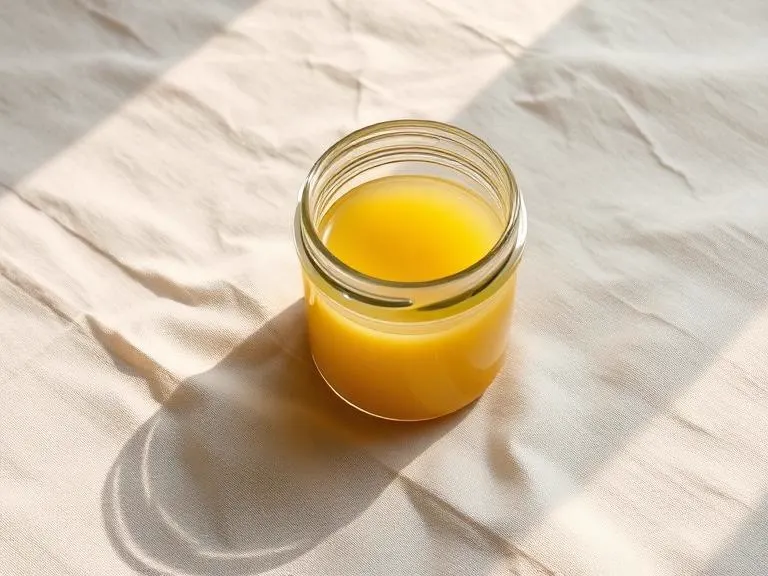
Nutrition per 100 g
Standardised to 100 g of ghee for fair comparison. Typical serving: 1 tbsp (13 g) — 112 kcal per 13 g serving.
| Nutrient | Per 100 g | Per serving (13 g) | Per 100 kcal |
|---|---|---|---|
| Energy | 862 kcal | 112 kcal | 100 kcal |
| Protein | 0 g | 0 g | 0 g |
| Carbohydrate | 0 g | 0 g | 0 g |
| Fat | 100 g | 13 g | 11.6 g |
| Fibre | 0 g | 0 g | 0 g |
Figures are typical values and vary with variety, preparation and brand.
Micronutrients
Vitamins and minerals per 100 g of ghee, with a typical serving and FDA Daily Value for adults.
| Nutrient | Per 100 g | Per serving (13 g) | % DV |
|---|---|---|---|
| Vitamins | |||
| Vitamin A | 1200 µg | 156 µg | 133% |
| Vitamin C | 0 mg | 0 mg | 0% |
| Minerals | |||
| Calcium | 0 mg | 0 mg | 0% |
| Iron | 0 mg | 0 mg | 0% |
| Sodium | 0 mg | 0 mg | 0% |
Source: USDA FoodData Central — Butter, Clarified butter (ghee)
% DV uses FDA Daily Values for adults. Nutrients that USDA does not report for this entry are omitted. Values vary with variety, preparation and brand.
Why eat ghee?
- Very high smoke point, so it suits frying.
- Virtually lactose- and casein-free.
How to include it
- Use a teaspoon to bloom whole spices.
- Substitute for butter in high-heat cooking.
Things to consider
- Almost entirely saturated fat; use sparingly.
- Calorie-dense — a spoonful is over 100 kcal.
Educational content. This article is for general information and is not medical advice. Speak to a qualified health professional about your individual circumstances.
Related foods

Butter
Churned cream: a flavour-first fat best used in small amounts.
- kcal
- 729
- protein
- 0.7 g
- fibre
- 0 g
per 100 g · Typical serving: 1 tbsp (14 g)

Coconut Oil
A solid tropical fat, over 80 % saturated despite its health-food reputation.
- kcal
- 864
- protein
- 0 g
- fibre
- 0 g
per 100 g · Typical serving: 1 tbsp (14 g)

Extra Virgin Olive Oil
The fat at the centre of the Mediterranean diet, rich in monounsaturates and polyphenols.
- kcal
- 881
- protein
- 0 g
- fibre
- 0 g
per 100 g · Typical serving: 1 tbsp (13.5 g)
Get smarter about food and fitness.
Practical nutrition and wellness information, delivered without the hype.